
Pawpaw Primer
I really enjoy foraging, especially when I can find things in my own region. In the past I have gotten Meadow Garlic, purple dead nettle, pine tips (for Spruce Tip Syrup) and young green pine cones (for Mugolio). But until recently, I have not had any luck getting what is supposed to be a common occurrence in Pennsylvania, the Pawpaw!
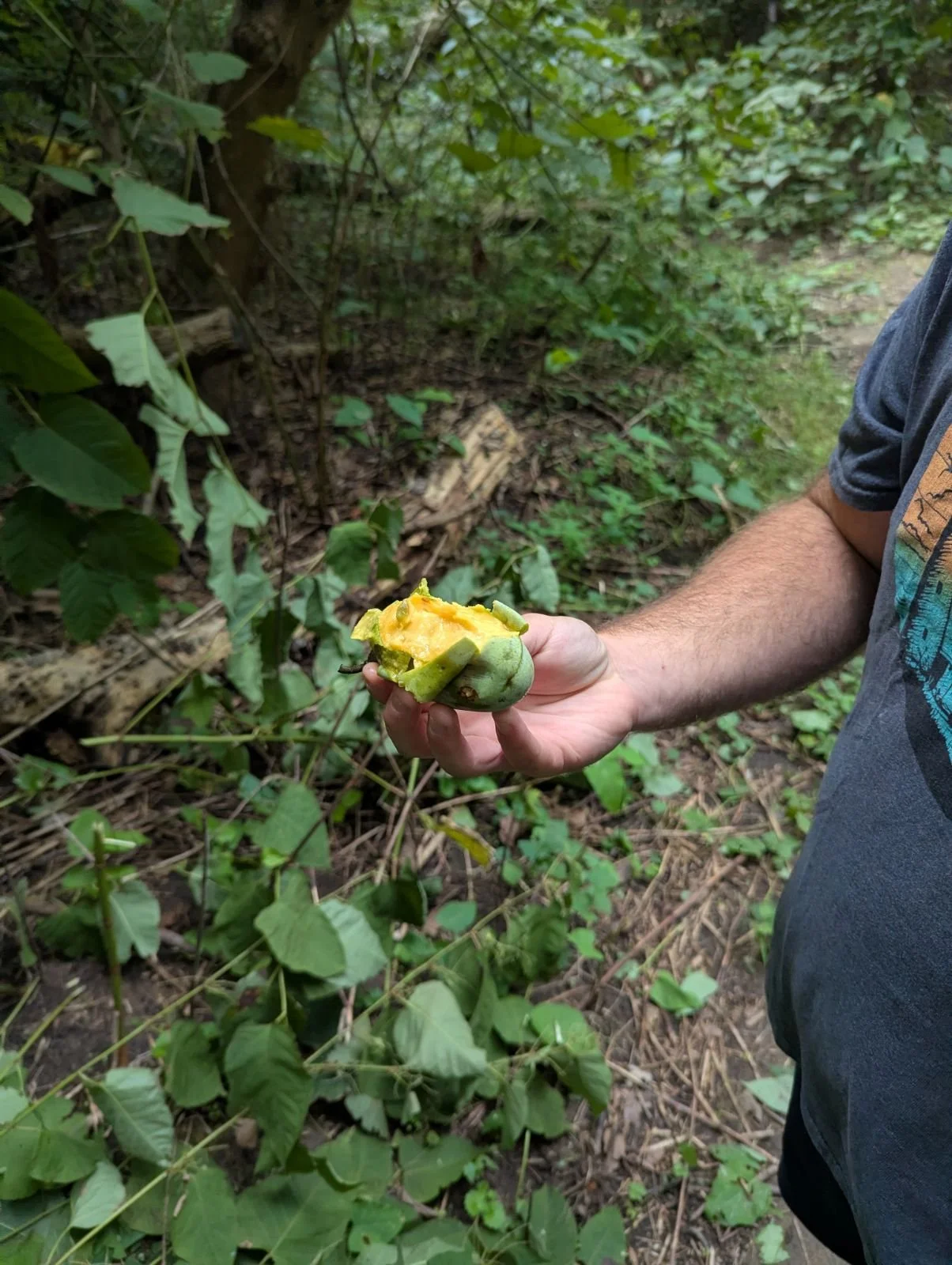
If you are from the United States, you may have heard about the Pawpaw, but it would not be surprising if this is the first time you are hearing about North America’s more unusual naturally occurring fruit.
Table of Contents
What's a Pawpaw?
The American pawpaw (Asimina triloba) is a species of fruiting trees native to the United States.
The leaves are large, pointed-oval in shape, and tend to drop a bit.
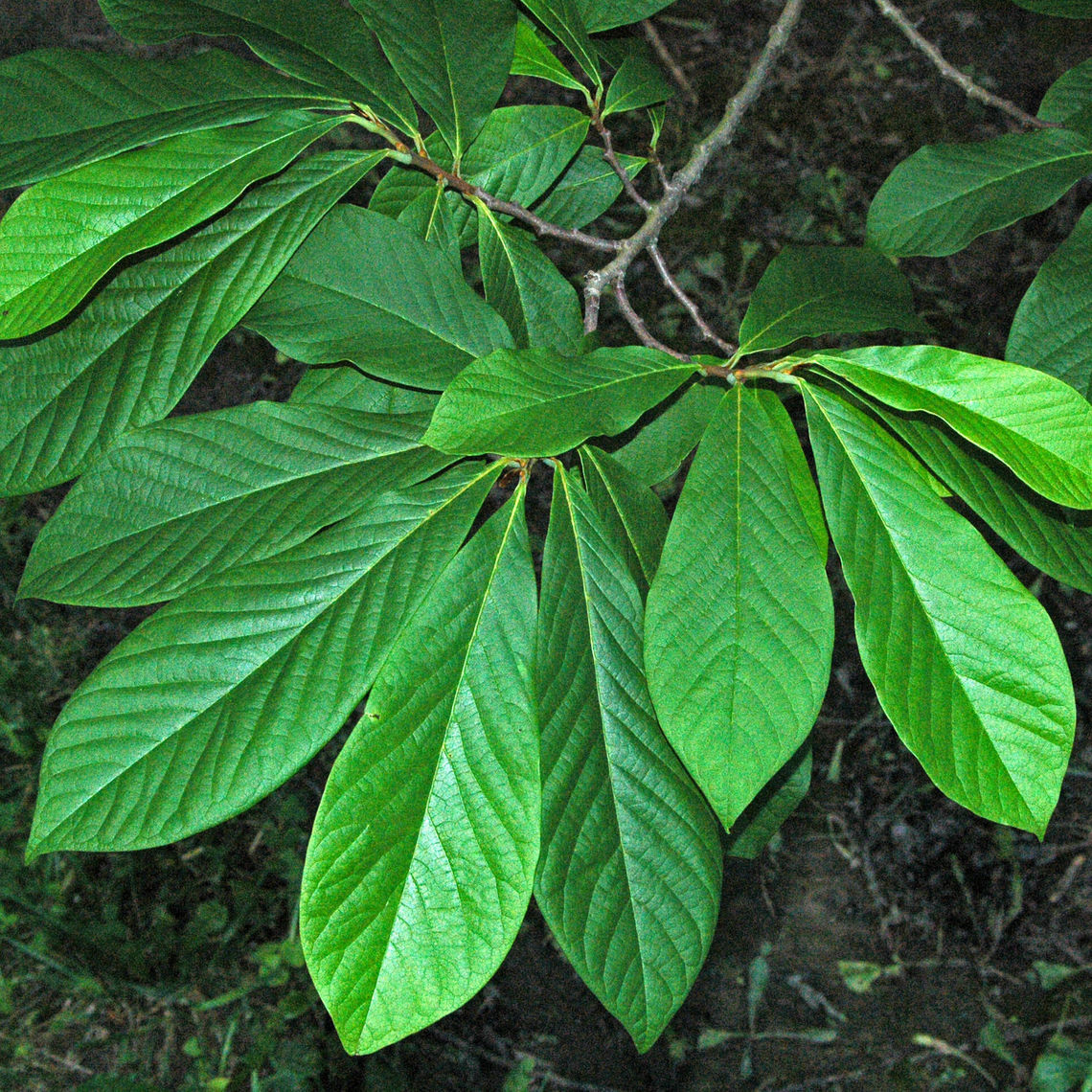
Photo by Franklin & Marshall College
The trees themselves grow small, purple flowers that turn into fruit, ripening around September to October.
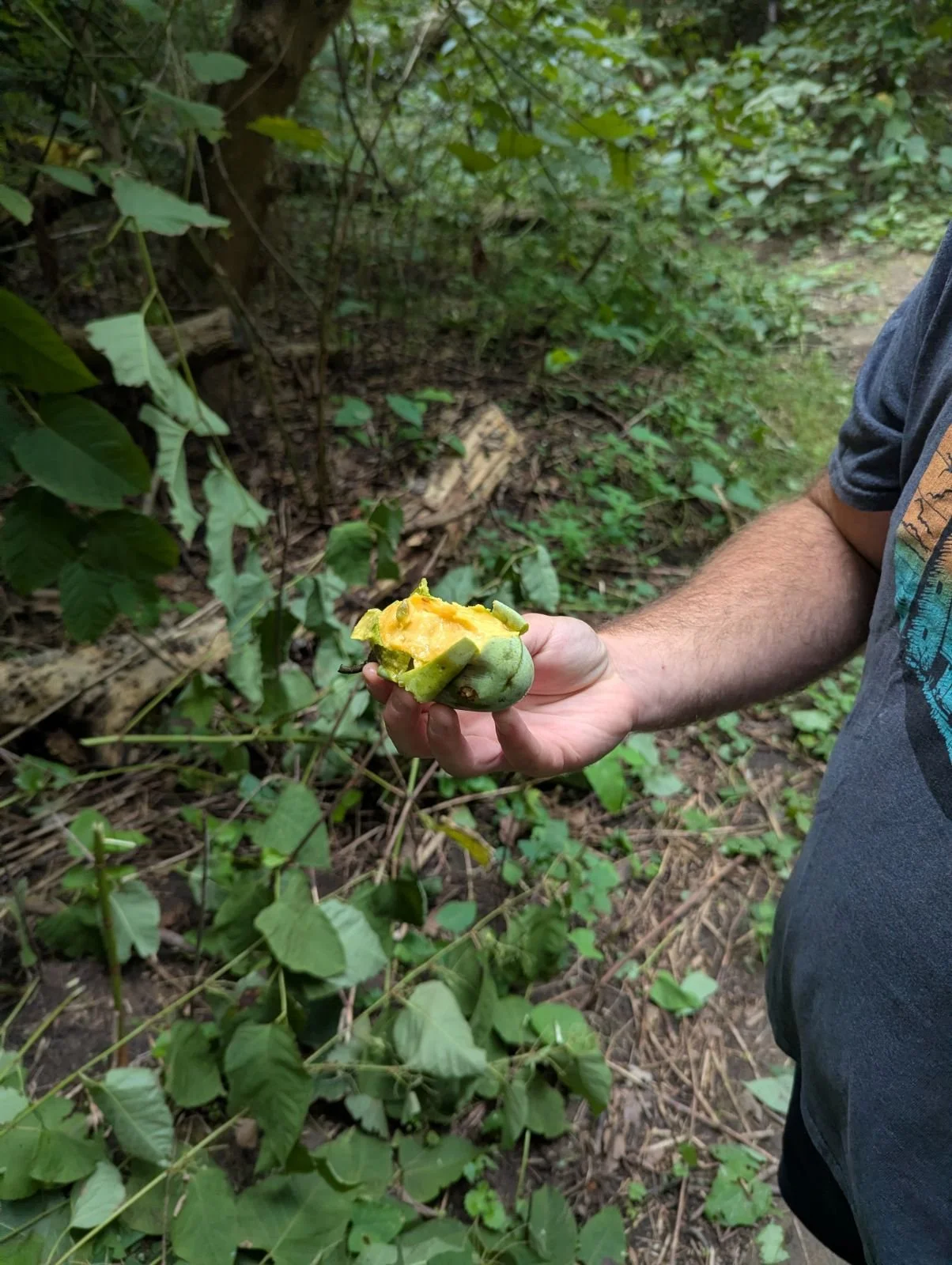
My brother in law and I found a large amount of Pawpaws near the Susquehanna river, near one of the hiking trails. We were lucky enough to get a small few that were in the early to late stage of ripeness.
What's Inside
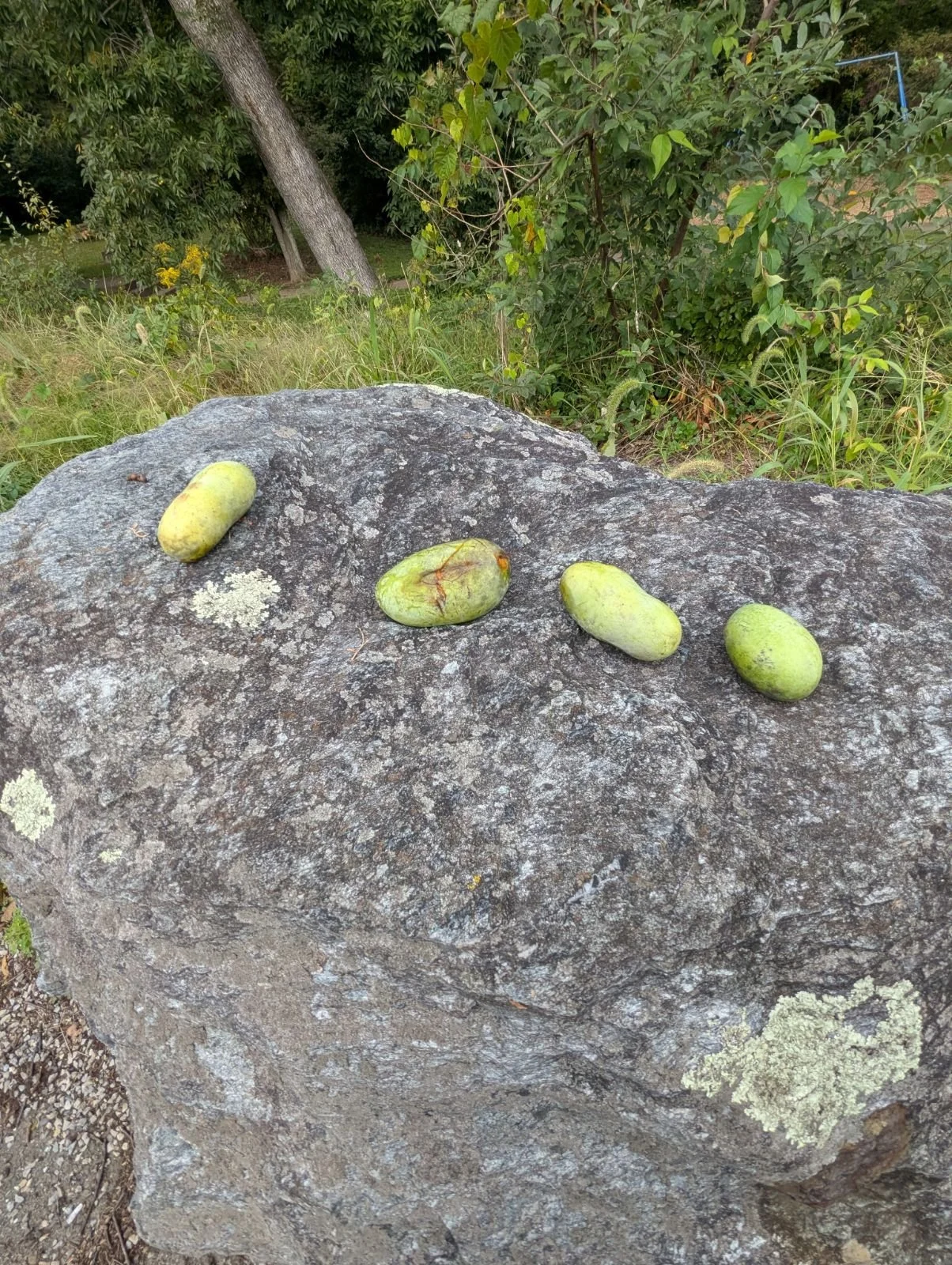
A characteristic of the pawpaw is that they very quickly ripen, drop from the tree, and start to go from that perfect texture and flavor to overripe. As you can see in the pictures below, the fruits we had gathered were already quickly going bad.
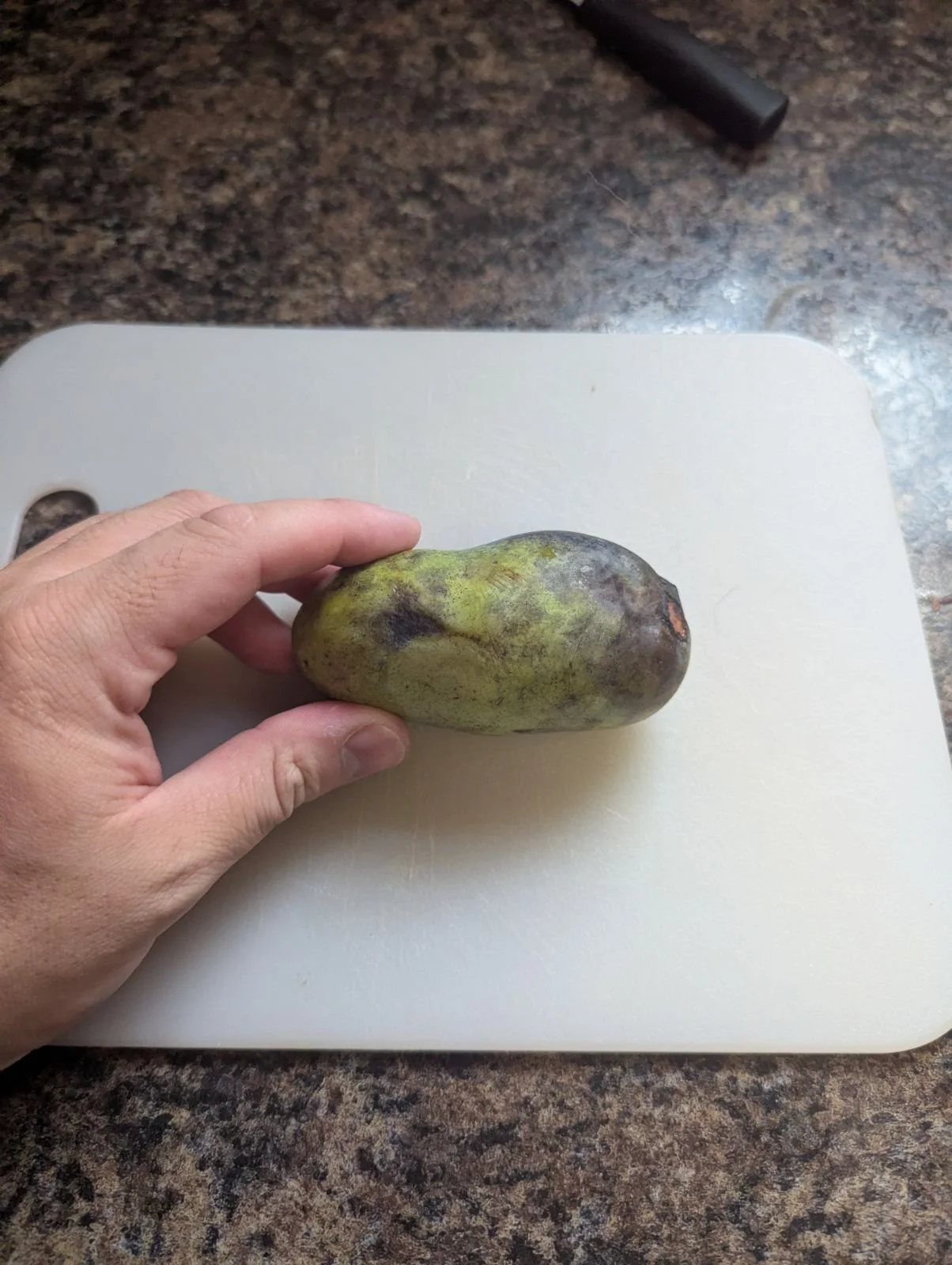
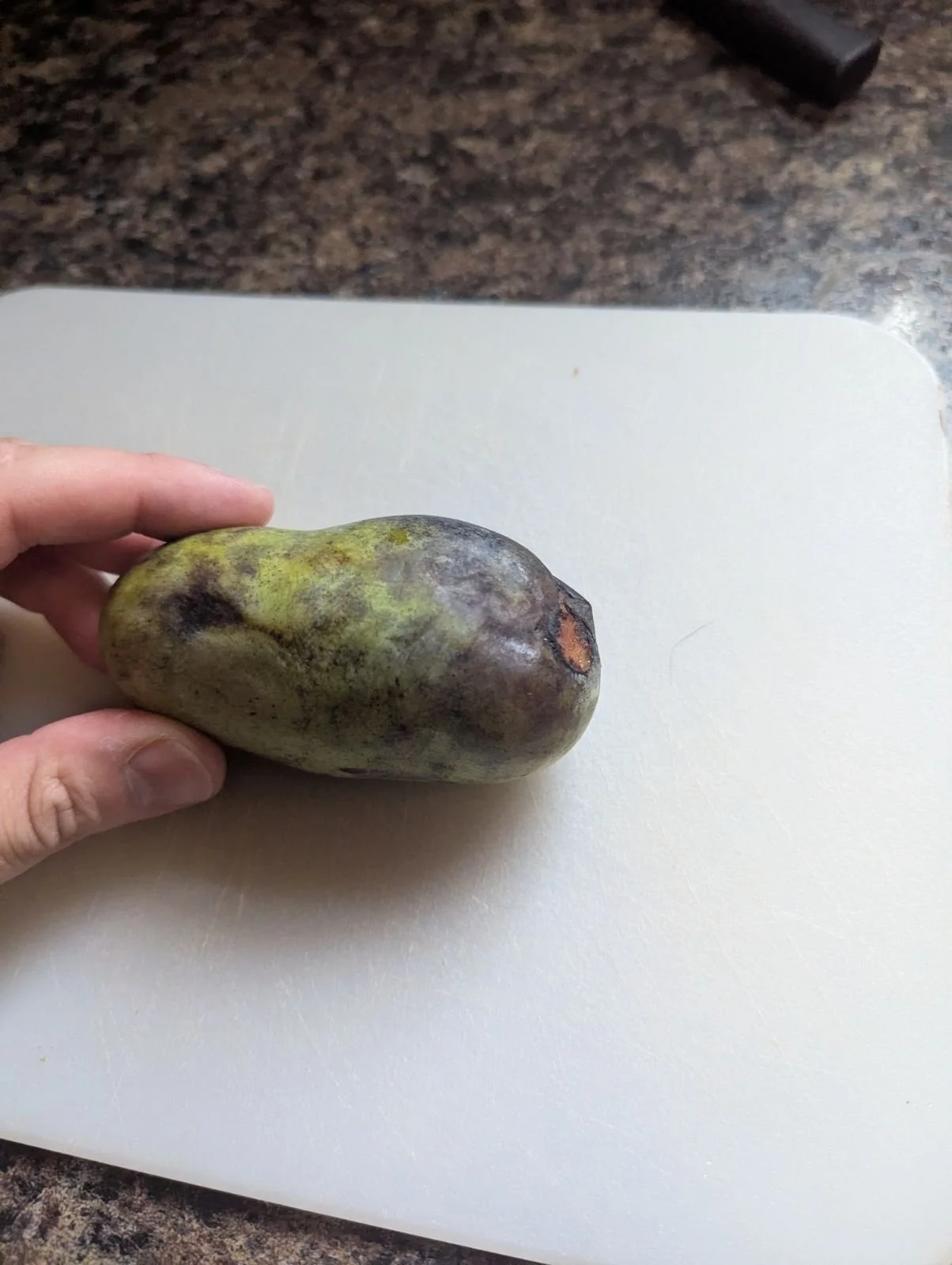
A ripe pawpaw will have a rich, yellow color to it with a pleasant smell reminiscent of mangoes or bananas.
The flavor itself is interesting. It tastes like it smells, with a mixture between a banana or mango, with a creamy, custard like finish to it.
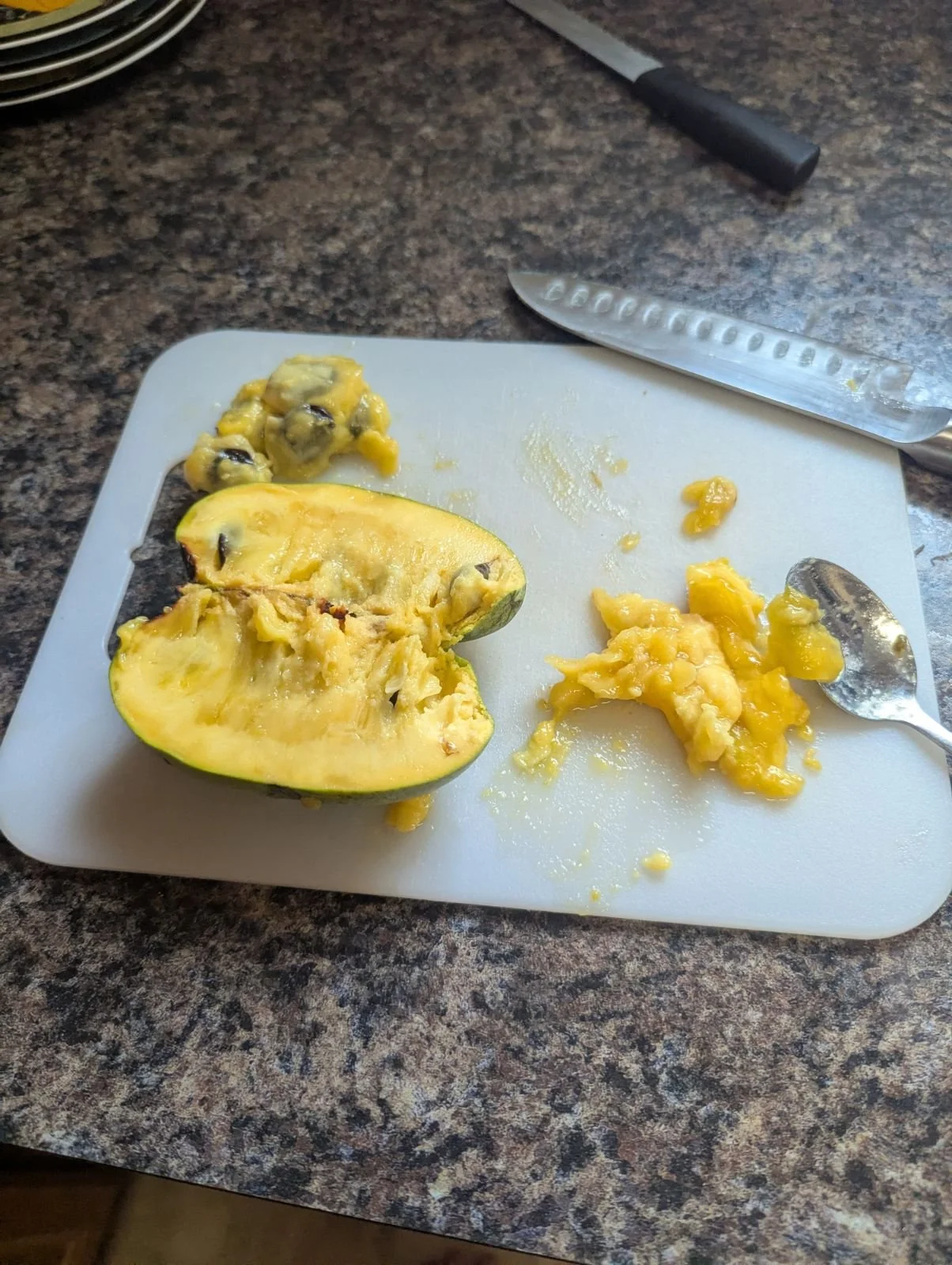
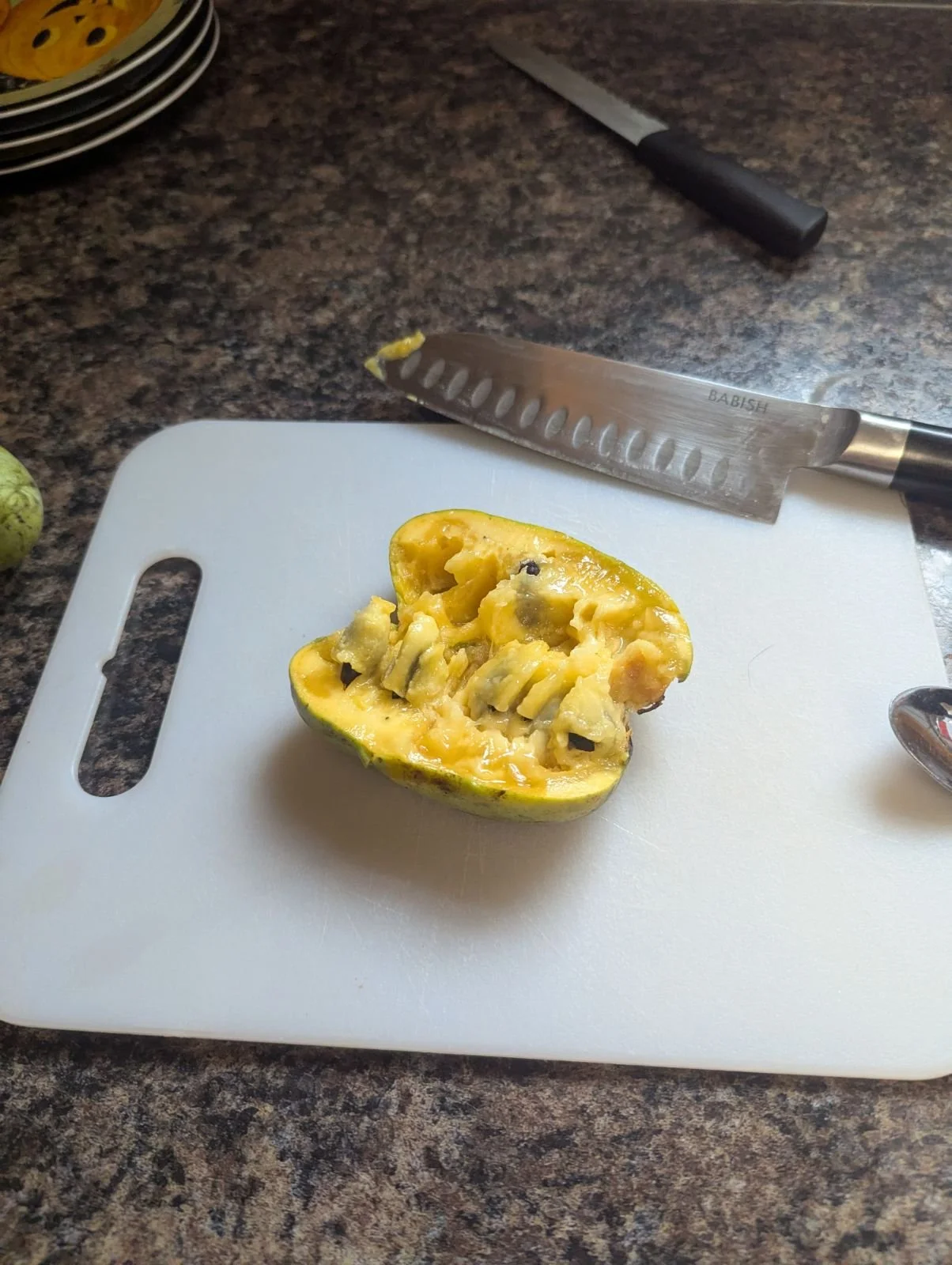
Of interesting note is one of the pawpaws we found was not entirely ripe. From what I have read, a pawpaw will not ripen once it falls off the tree.
I decided to cut it open and see if there was a difference, and it was quite noticeable!
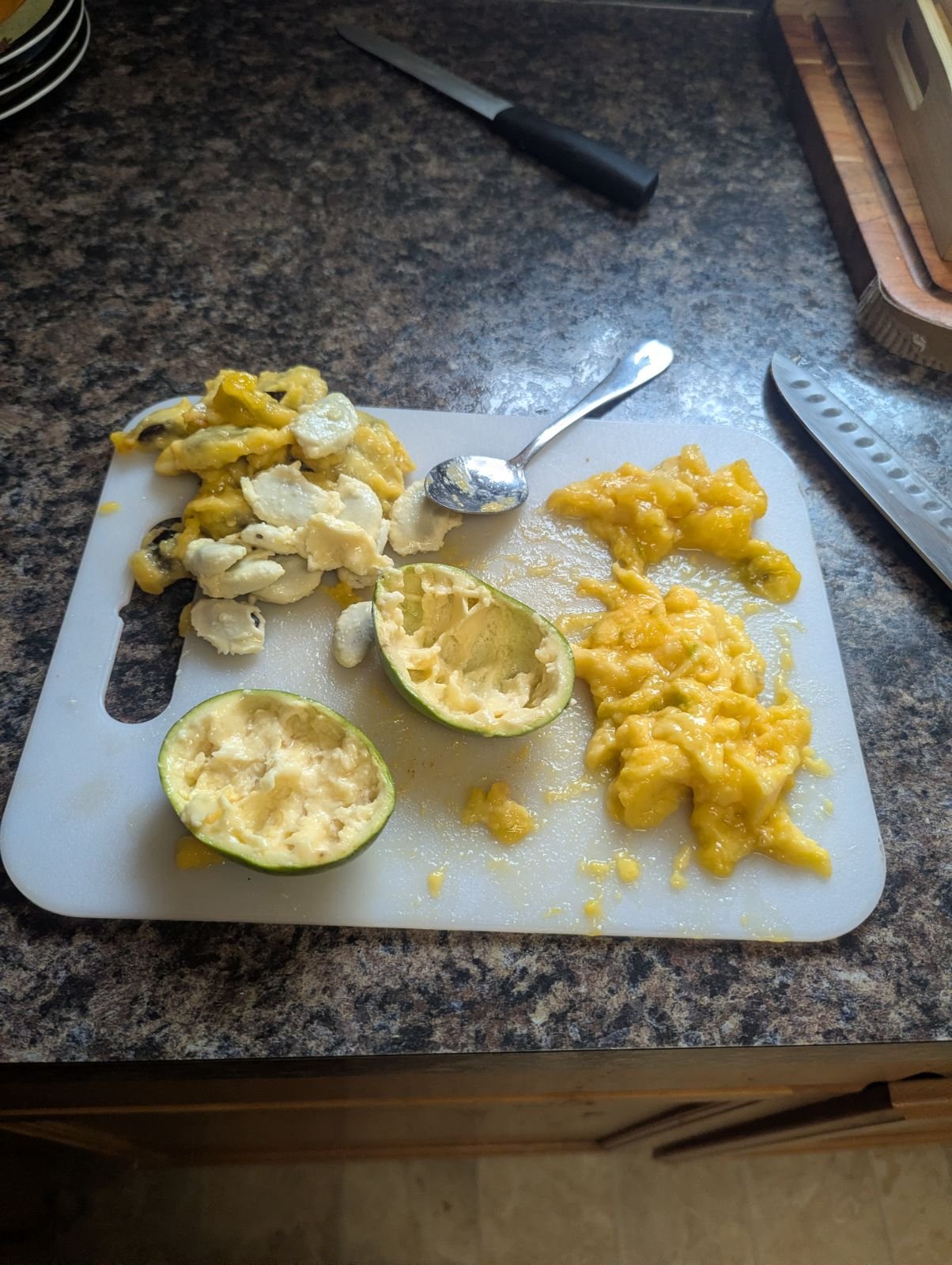
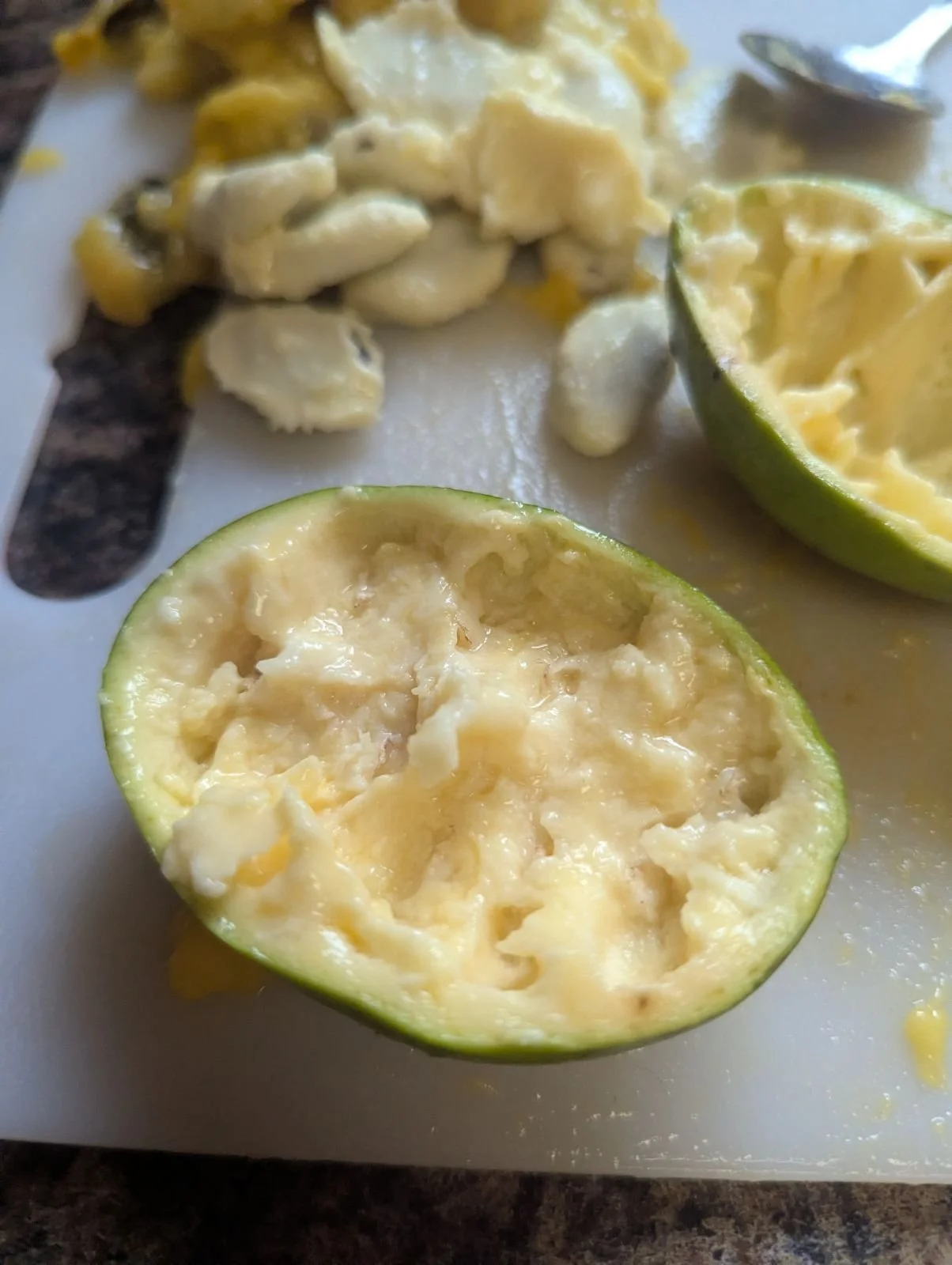
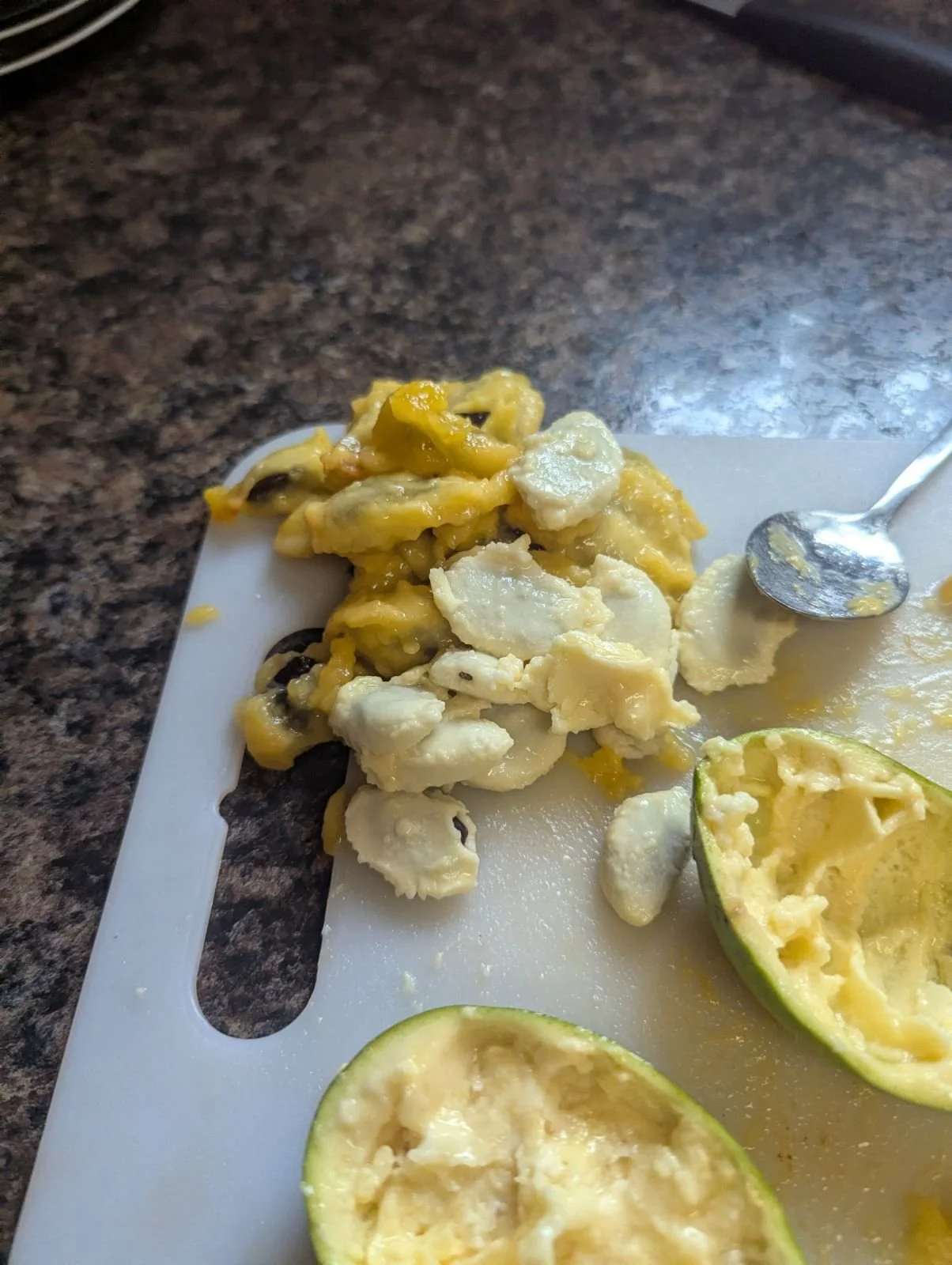
Compared to the ripe (almost overripe) pawpaws, the flesh was pale. It was significantly firmer. It had a subtle taste of pawpaw, but the mango and banana flavor was not really there at all.
Why so Uncommon?
Now you might be asking yourself, “Why is such an unusual fruit not grown in larger scale?”
Well, there are a few reasons.
First off, the Pawpaw are unable to self pollinate. This means that a patch of pawpaws (since one plant will often sprout multiple tree-like “stems”) may be unable to create fruit if no other trees are nearby.
In addition, the pawpaw is an old tree (its in the same family as Magnolias). This means, among other things, that it evolved to be pollinated by beetles, not other insects.
Finally, pawpaws do not last long once they ripen. As I learned, once the pawpaws were ripe, they start to overripen fast.
All of this comes together to make a fruit that is hard to cultivate in any large way, difficult to pollinate, and very limited in shelf life.
Pee Paw Pawpaws
Something interesting about the pawpaws is that they are a very old plant, and originally evolved to be dispersed by Megafauna (just like the Avocado).
That does not mean, however, that these fruits remain uneaten. Amongst the fruit we were able to harvest, there were numerous partially-or-fully eaten fruits that must have been grabbed by the local wildlife.
Pawpaw Puree
With the pawpaws I had, I ate some of it but decided the best use would be a sort of ice cream.
Going off of what I saw online, I mixed it together with milk, sugar, and some of the thickeners I had on hand (I used instant pudding mix and xanthan gum since I was making it in my Ninja Creami). Hopefully I had enough to give a good flavor!
Final Thoughts
Finding pawpaws and actually getting some ripe fruit will be the highlight of foraging for the year. Last year I tried, and could not find as much as a plant. But I now think I know why I had so much difficulty.
Last year when I was looking, it was later in the season. Since pawpaws ripen and very quickly spoil, there is a chance I entirely missed the harvest time. Additionally, local wildlife was probably already aware of the plants and grabbed anything available. Now that I know what to look for, and where some fruiting trees are located, I should be able to do this in the future.
I do wonder if the pawpaws are late this year, since its almost October. One thought is that the late frost that harmed local apple orchards is to blame. Instead of eliminating the fruit entirely, they were delayed by a bit. What ever the cause, I am just happy to get some fruit this time.